Governance in Aotearoa: Are We Evolving Fast Enough?
Reflections from across the governance table on maturity, complexity, critical thinking, technology and the growing responsibility of stewardship.
Governance is a fascinating place to be right now. And blardy challenging at times!
Across Aotearoa, organisations are navigating economic pressures, changing expectations, geopolitical uncertainty, technological disruption and increasingly interconnected risks. Artificial intelligence is finding its way into almost every sector, cybersecurity is firmly a governance responsibility, and emerging sciences are opening possibilities we’re only beginning to understand.
Meanwhile, many of the systems, processes and institutional arrangements we rely upon were developed for a world that operated quite differently.
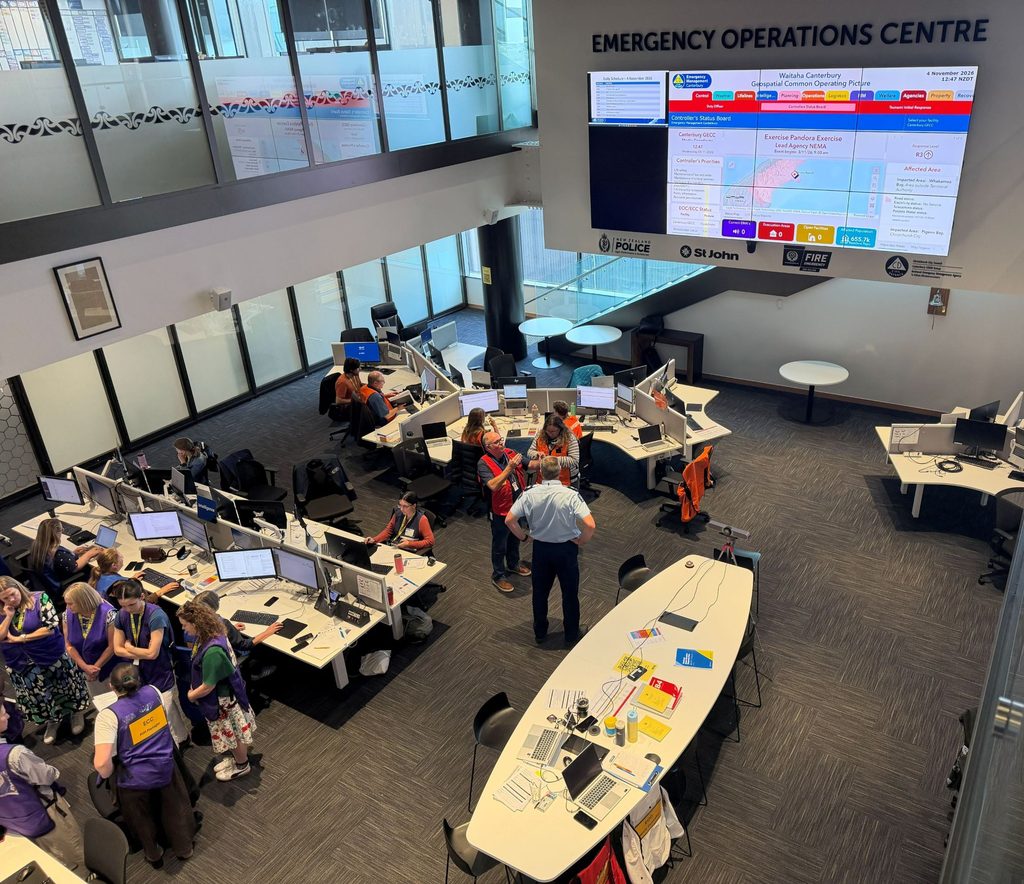
I’ve been reflecting on this through my governance mahi across technology, education, industry, iwi, economic development and community environments, alongside my work in emergency management and recovery.
Each environment has its own mandate, people, challenges and levels of maturity. Some are highly developed. Others are still establishing their foundations. And some are trying to evolve while continuing to operate within systems that don’t necessarily make that easy.
What interests me is how often the same questions arise across these different spaces.
Are we asking the right questions? Do our policies and processes actually support good decision-making? Are we understanding the relationships between the issues we’re governing? And how well are we preparing our organisations for futures we cannot fully anticipate?
I’m increasingly convinced that the next evolution of governance won’t come simply from producing more frameworks, policies or reports.
It will come from strengthening our collective judgement, understanding our systems more deeply and becoming more deliberate about the responsibilities we carry.
The good, the bad and the professionally immature
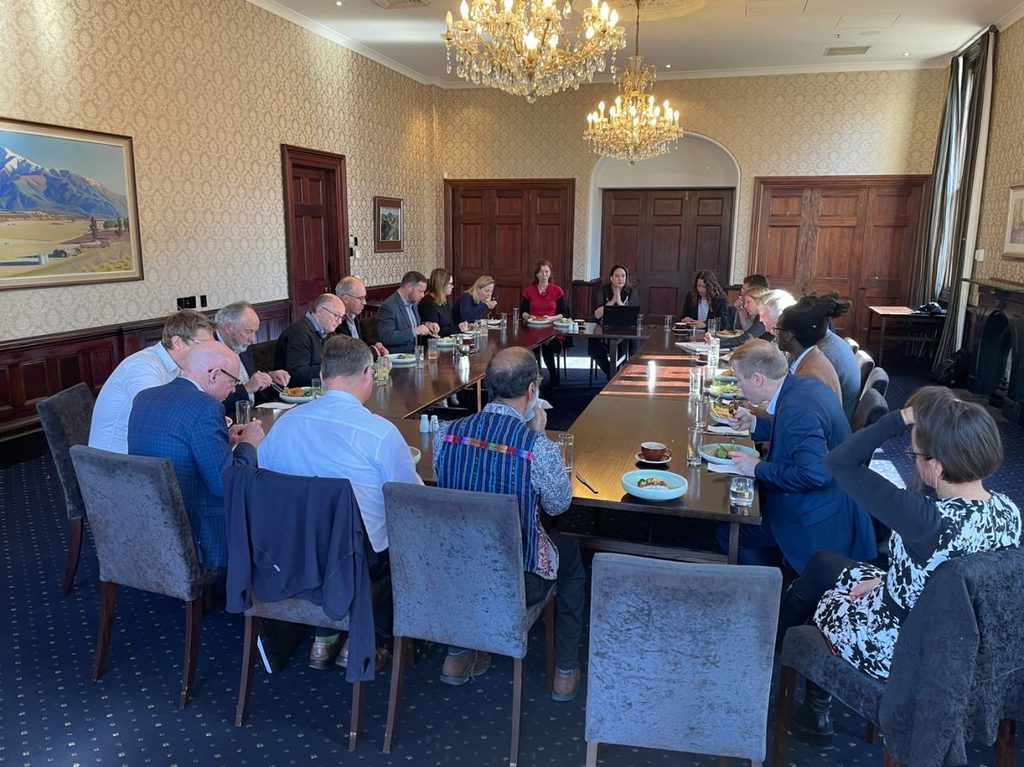
One of the privileges of serving across different governance environments is experiencing the many ways boards operate.
I’ve worked alongside highly capable directors, trustees and executives who bring enormous professionalism, integrity and commitment to their responsibilities. I’ve also encountered environments where governance maturity is still developing, sometimes despite the experience and qualifications of the people involved.
And yes, I’ve seen professional immaturity too.
I don’t necessarily mean a lack of intelligence or expertise. Professional immaturity can show up when people struggle to distinguish governance from management, when constructive challenge becomes personal, when difficult questions are avoided, or when personalities begin to carry more weight than the purpose of the organisation.
Sometimes it’s the individual. Sometimes it’s the collective culture. And sometimes the organisation simply hasn’t developed the systems, information flows and decision-making arrangements needed to support good governance.
We should be able to recognise these things without automatically condemning the people involved. Governance capability develops, and organisations can be at very different stages of that journey.
One of the boards I particularly enjoy serving on is N4L. It’s a pleasure to work alongside highly professional directors and an engaged, capable executive team. Challenge is welcomed, people are prepared, and discussions are grounded in the organisation’s purpose and responsibilities.
We don’t always agree, nor should we. But there is trust, mutual respect and the confidence to examine difficult matters without every disagreement becoming a contest.
That makes an enormous difference.
A mature board isn’t one that has stopped challenging itself. It’s one that has developed the relationships, discipline and confidence to keep doing so.
I think we sometimes underestimate how important those conditions are. Good governance isn’t simply about assembling impressive individuals around a table. It’s about what those individuals are collectively capable of achieving.
And when you’re surrounded by level-headed, growth-minded people, the hard stuff becomes a little easier to navigate.
When process becomes the purpose
I’ve developed a growing interest in the difference between having governance arrangements and actually governing well.
We need policies, delegations, reporting, assurance, risk management and clear accountabilities. These aren’t optional extras. They provide the foundations for responsible oversight.
But I’ve also seen how easily organisations become absorbed in administering their own governance machinery.
We review a policy because its review date has arrived. We receive reports because they’re scheduled. We establish committees, produce dashboards and complete assurance activities, sometimes without sufficiently examining whether they’re helping us understand the organisation or make better decisions.
A board can receive a comprehensive risk register and still struggle to understand how its risks interact. It can have an extensive policy library while implementation remains inconsistent. And it can receive an enormous board pack without necessarily receiving the insight needed to exercise good judgement.
I encounter this distinction particularly through audit, risk and assurance work.
A policy being approved is not the same as that policy being understood, implemented or effective. Similarly, having a committee responsible for oversight doesn’t mean the organisation has developed the underlying capability to manage the matters being overseen.
There is important work in moving from establishment to maturity. Clarifying decision rights, understanding who owns which risks, ensuring subsidiaries and operational teams retain appropriate responsibilities, and strengthening assurance without governance drifting into management.
None of that is particularly glamorous. But it matters.
I’ve become increasingly interested in asking three straightforward questions:
Why are we doing this? What are we trying to achieve? And how do we know it’s working?
Those questions can expose quite a lot.
We shouldn’t confuse being busy with making progress, or being compliant with being effective.
AI is exposing more than a technology problem
Artificial intelligence provides a particularly useful example.
Across organisations, we’re seeing considerable attention directed towards AI policies, acceptable-use guidelines, procurement requirements, privacy, information security and risk frameworks.
All necessary, of course.
But AI is also revealing weaknesses that were often there long before the technology arrived.
If an organisation doesn’t understand its data, an AI policy won’t suddenly create good data governance. If decision rights are unclear, introducing automated recommendations can make accountability even more complicated. If staff lack digital literacy or an organisation has weak cybersecurity practices, adding another policy doesn’t automatically resolve those problems.
AI didn’t necessarily create these gaps. Sometimes it just made them easier to see.
And the challenge is becoming more significant as AI systems evolve from tools that generate content towards systems capable of carrying out increasingly complex tasks.
Approval at a point in time is not necessarily assurance over the life of an AI system.
Boards need to understand how these technologies are being introduced, what information they can access, how their performance is monitored, who remains accountable for their actions and what happens when something goes wrong.
We also need to understand the consequences of dependency. What happens when a provider changes its terms, a system behaves unexpectedly, information is compromised or an organisation loses the capability to operate without a particular technology?
These aren’t questions for the IT team alone. They involve procurement, workforce capability, cybersecurity, organisational culture, data stewardship, ethics, risk appetite and the responsibilities of directors.
I’m excited about what AI can help us achieve. But I don’t believe technological enthusiasm should get ahead of our ability to understand and govern the consequences.
We can be technologically ambitious while remaining socially accountable.
And as our systems become more capable, our human capability to question, evaluate and exercise judgement becomes even more important.
Complexity doesn’t always need to be reduced
Another recurring observation is how hard we work to simplify increasingly complex environments.
I understand the need. Boards require clarity, executives need direction and organisations must make decisions they can implement.
But there’s a difference between making complexity understandable and pretending it doesn’t exist.
We organise our work into portfolios and functions: finance, technology, people, strategy, risk, operations and so on. These distinctions help us allocate responsibilities and manage workloads.
The trouble is that the issues we’re governing rarely respect those boundaries.
A cybersecurity incident can quickly become an operational, financial, legal, reputational and community issue. A prolonged electricity outage can affect telecommunications, water, electronic payments, healthcare, education, businesses and household wellbeing simultaneously.
In emergency management and recovery, we spend considerable time trying to understand those relationships and their consequences. Restoring a service doesn’t necessarily mean restoring the ability of a community to function.
That thinking is equally relevant around a governance table.
We can separate matters on an agenda, but that doesn’t mean they’re separate in the world.
I’ve been exploring the idea that complexity doesn’t always need to be reduced to become understandable. Sometimes we need to change how we observe or represent a problem so the relationships between its parts become clearer.
That might mean looking beyond a conventional risk register to examine dependencies. It might mean understanding a technology investment through its workforce, community and equity implications. Or it might mean bringing different forms of knowledge into a discussion before deciding what the problem actually is.
This isn’t an argument against simplicity. Good governance needs clear decisions and practical action.
It’s an argument for being more thoughtful about how we arrive at that simplicity.
If we simplify too early, we may remove the very relationships we need to understand.
What are our systems designed to govern?
This leads me to a question I’ve been carrying for some time.
Are we trying to address twenty-first-century challenges through institutional arrangements built around nineteenth- and twentieth-century assumptions?
Many of our political, economic and organisational systems have developed over long periods. They’ve provided stability, accountability and important protections, and we shouldn’t dismiss those achievements.
But the conditions in which they operate have changed.
Information moves differently. Technology crosses organisational and geographic boundaries. Communities are interconnected in ways our reporting structures don’t always recognise. Decisions made within one institution can create consequences across several others.
So perhaps we need to distinguish between the principles worth preserving and the arrangements that may need to evolve.
Accountability, transparency, integrity, fairness and responsible decision-making remain fundamental. But the structures through which we exercise those principles should be open to examination.
What should we retain? What should we adapt? And what might we need to create?
I don’t think the answer is to dismantle everything that came before us, nor to defend existing systems simply because they’re familiar.
We need to understand what is working, where the limitations are and what different approaches might make possible.
That requires evidence, critical thinking and a willingness to challenge assumptions we’ve become so accustomed to that we no longer recognise them as choices.
Indigenous knowledge and the design of our systems
This is where I believe Indigenous knowledge systems have a significant contribution to make, particularly here in Aotearoa.
I sometimes wonder whether we begin in the wrong place when discussing the integration of Indigenous approaches into governance.
We often start with an established institutional model and ask where Māori values, knowledge or practices might fit.
But what happens if we reverse that thinking?
What if we begin with whakapapa, relationships, collective responsibility, mana, intergenerational wellbeing and our connections to the natural world, then consider what governance arrangements are needed to honour those foundations?
That’s a different design question.
Through te ao Māori, whakapapa provides ways of understanding relationships and continuity. Whanaungatanga recognises the importance of connections between people and communities. Kaitiakitanga brings responsibilities for care and stewardship that extend beyond immediate interests.
These aren’t simply cultural elements to be inserted into an otherwise unchanged governance framework.
They can influence how we understand the system itself.
And these knowledge systems are not new. They have their own histories, practices and depth. The opportunity is not to present them as recent discoveries, but to consider how contemporary governance can engage with them meaningfully and respectfully.
Nor should we assume that Indigenous approaches are uniform or that they provide easy answers to every challenge. Different contexts, communities and mandates require careful consideration.
But if we’re serious about evolving governance in Aotearoa, we should be prepared to examine not only who has a seat at the table, but also the assumptions upon which the table was designed.
For me, that’s where the possibilities become particularly interesting.
Science, philosophy and the responsibility to choose
We’re also living through extraordinary developments in science and technology.
AI, quantum technologies, photonics, advanced sensing and other emerging fields are expanding what humanity may be capable of understanding and doing.
I find this mahi fascinating. The possibilities for discovery, problem-solving and innovation are enormous.
But the ability to do something and the wisdom to decide whether we should are not the same thing.
This is where I believe governance needs to remain connected to philosophy, ethics and the wider human consequences of technological change.
What constitutes reliable knowledge? How do we distinguish evidence from assumption? Who benefits from a technological advance, who carries the risks, and who gets to decide what is acceptable?
And what happens when our ability to generate answers begins to outpace our capacity to understand their implications?
These aren’t entirely new philosophical questions. But emerging technologies are giving them new urgency.
Governance cannot be expected to resolve every ethical dilemma or predict every consequence. What it can do is establish the conditions for informed decisions, appropriate scrutiny, meaningful participation and ongoing accountability.
Sometimes the responsible decision will be to advance. Sometimes it will be to test, adapt or introduce safeguards.
And occasionally, the responsible decision may be not to proceed.
That isn’t a rejection of innovation. It’s part of governing it well.
The maturity to know what we don’t know
One of the more interesting things about experience is that it doesn’t necessarily make uncertainty disappear.
Sometimes it makes us more aware of how much we don’t understand.
I’ve found that the more I work across complex environments, the more conscious I become of the limitations of any single perspective, including my own.
I think that’s healthy.
There is confidence that comes from knowing your field. But there is also confidence in being able to say, “I don’t know enough about this yet.”
We need both.
Professional maturity includes knowing when to seek expertise, when to challenge an assumption, when to change your position and when to recognise that the information in front of you isn’t sufficient to make a responsible decision.
It also means being able to disagree without making disagreement personal.
A board benefits from diverse experience and expertise, but diversity alone doesn’t guarantee better decisions. People must be willing and able to listen, question, examine evidence and work through different perspectives.
And I think we need to pay particular attention to critical thinking as technology changes how information and advice are produced.
Having access to more information doesn’t necessarily mean we’re better informed. Having an answer doesn’t mean we understand the problem. And being able to make a decision quickly doesn’t necessarily mean we’re making a good one.
One of the most valuable capabilities we can develop is knowing when to question our own confidence.
A mature board doesn’t need everyone to think alike. It needs people who know how to think well together.
The responsibility of seeing across systems
There’s another responsibility I’ve been reflecting on through my own governance journey.
What do we do with the learning that comes from contributing across different environments?
A discussion about workforce capability can inform how I think about education and industry pathways. Digital infrastructure and cybersecurity considerations connect directly with emergency management, community resilience and recovery. Iwi economic development brings questions about enterprise, procurement, infrastructure, capital and intergenerational outcomes into conversations that might otherwise remain focused on a single sector.
The connections are everywhere, although our institutional arrangements don’t always make them easy to see.
I think those of us fortunate enough to work across different governance environments have a responsibility to make good use of that experience.
That doesn’t mean carrying confidential information between boardrooms or blurring our duties to different organisations. Every appointment comes with its own obligations, including confidentiality, conflicts of interest, accountability and the responsibility to act within the relevant mandate.
Those boundaries matter.
But there is a difference between transferring privileged information and becoming a more capable practitioner through what we learn.
We can carry better questions. We can recognise patterns worth examining. We can identify where a practice might be useful in another context, without assuming it can simply be copied. And where there is a legitimate shared purpose, appropriate authority and transparency, we can help connect people and organisations who may benefit from working together.
I also think we need to be careful about the illusion of having a complete view.
Working across several systems can reveal relationships others may not immediately see, but it can also reinforce our own assumptions if we aren’t prepared to challenge them. Deep expertise within a single organisation or community is just as important as the ability to see across sectors.
The responsibility is to bring those perspectives into conversation, not to presume that one person can understand the whole.
For me, this is becoming a deliberate part of my practice: taking time to reflect on what I’ve observed, distinguishing evidence from interpretation, considering what might be transferable and looking for appropriate opportunities to contribute to wider learning.
Not simply accumulating governance appointments or attending meetings.
But becoming a better steward of the learning those experiences create.
Beyond the boardroom: are we making things better?
Of course, all this thinking needs to lead somewhere.
One of the questions I keep returning to is how we know whether our governance is actually improving anything.
We can measure financial performance, compliance, organisational growth, service reliability and the delivery of strategic priorities. These are important, and boards must understand them.
But they don’t always tell us whether our decisions are improving the conditions for the people and communities our organisations exist to serve.
In technology, we might measure connectivity, security and service performance. In education, we might consider achievement, participation and pathways. In economic development, we might examine enterprise growth, investment and access to opportunity.
Within iwi environments, we must also consider cultural continuity, mana, collective wellbeing, relationships and the aspirations of future generations.
Different purposes require different measures.
And some of the things that matter most are difficult to count.
Trust, belonging, resilience, capability and the strength of relationships can be fundamental to long-term outcomes, even when they don’t fit neatly into a quarterly dashboard.
That doesn’t mean replacing evidence with good intentions. It means being more thoughtful about what constitutes useful evidence and recognising the limitations of our measures.
It also means distinguishing activity from impact.
Holding meetings is an activity. Delivering a programme is an output. Understanding whether that programme contributed to meaningful change is an outcomes question.
And in interconnected systems, we need to be careful about claiming outcomes as though any one organisation achieved them alone.
A young person’s pathway may be influenced by their whānau, kura, community, employers and access to technology and opportunity. Community resilience depends on infrastructure, local leadership, social relationships and the ability of multiple organisations to work together.
If we measure only what sits within our own organisational boundaries, we risk overlooking the wider outcomes we’re supposed to be contributing towards.
Perhaps we could spend a little more time around our governance tables asking:
Are we receiving information that helps us understand the issue, or simply more information? Have we considered the consequences beyond our organisation? Whose knowledge or experience is missing? What are we assuming? And what evidence will help us understand whether our decisions have made a meaningful difference?
These questions won’t replace good governance disciplines. They may, however, help us use those disciplines more effectively.
Because ultimately, I think one of the most important questions we can ask is:
What has become better because of the decisions we’ve made, for whom, and how do we know?
From governance to stewardship
Increasingly, I find myself thinking about governance through the lens of stewardship.
Governance provides the structures, responsibilities and accountabilities through which organisations are directed and overseen. Stewardship asks us to consider what we are responsible for sustaining, protecting, enabling and passing forward.
I don’t see these as competing ideas. I think they need one another.
We have immediate responsibilities to the organisations we serve. We must understand their purpose, oversee their performance, manage risk and ensure appropriate accountability.
But we also need to recognise that we’re temporary participants in institutions, communities and systems that existed before us and may continue long after we’ve moved on.
Our decisions can strengthen or constrain what becomes possible for those who follow.
That’s particularly important when we consider infrastructure, education, emerging technologies, natural resources, institutional capability and the wellbeing of future generations.
Good stewardship doesn’t mean trying to control the future or assuming we know what those who come after us will need.
It means exercising our responsibilities today while helping preserve and expand their capacity to make choices of their own.
That may involve strengthening an organisation’s ability to adapt, developing future leaders, creating space for different knowledge systems, improving how we learn from evidence or ensuring that short-term decisions don’t unnecessarily close off longer-term possibilities.
And it brings us back to the importance of humility.
We don’t know everything. We can’t anticipate every consequence. And even the most experienced board will sometimes make decisions with incomplete information.
But we can be deliberate about how we think, who we involve, what we question and how we learn.
The opportunity in front of us
For all the challenges I’ve described, I remain enormously optimistic about governance in Aotearoa.
I’ve had the privilege of working alongside people who take their responsibilities seriously, bring considerable experience, welcome constructive challenge and are prepared to keep learning. I’ve also experienced environments where our systems, behaviours and processes still have some growing to do.
Both have taught me something.
And perhaps that’s what makes this such a fantastic time to be involved.
We’re governing organisations through changes that are challenging our assumptions about technology, society, knowledge, responsibility and the future. We won’t always get it right, and we shouldn’t pretend otherwise.
But we can become better at learning, questioning, connecting and making decisions together.
We can also be more deliberate about bringing lessons from different environments into our own practice, while respecting the boundaries and responsibilities that come with each role.
I don’t think the next evolution of governance is simply about becoming faster at making decisions or producing more sophisticated frameworks.
It’s about developing the collective judgement to understand what those decisions mean, for whom, and for what comes next.
And that brings me back to something I value enormously about the people I work alongside.
When you’ve got thoughtful, level-headed people around you who are curious, capable of challenging one another and willing to grow, even the difficult stuff becomes a little easier.
Not because the complexity disappears, but because we’re better equipped to work through it together.
We have a responsibility to govern well today. We also have an opportunity to help shape the conditions in which good governance can continue to evolve.
I reckon that’s a challenge worth taking on.
Our responsibility begins with the decisions in front of us. Our stewardship extends to what those decisions make possible beyond us.
Kia māia, mō rātou.Be Bold, For Them.
These are my personal reflections from governance and related professional practice, rather than the views of any organisation or board I serve.
Listening to those before – navigating today – for their tomorrow (Dad, Mum, and Koro Doug)
I speak to share. To share what I've observed across the many worlds I have the privilege to serve - technology, governance, education, emergency mana...
Thirty years after leaving Papakura High School believing I'd stuffed things up, I returned to speak to the next generation of rangatahi. What I disco...