On Returning to Papakura High School after 30 years, the psychology of connection, and why serving the places that shaped us matters
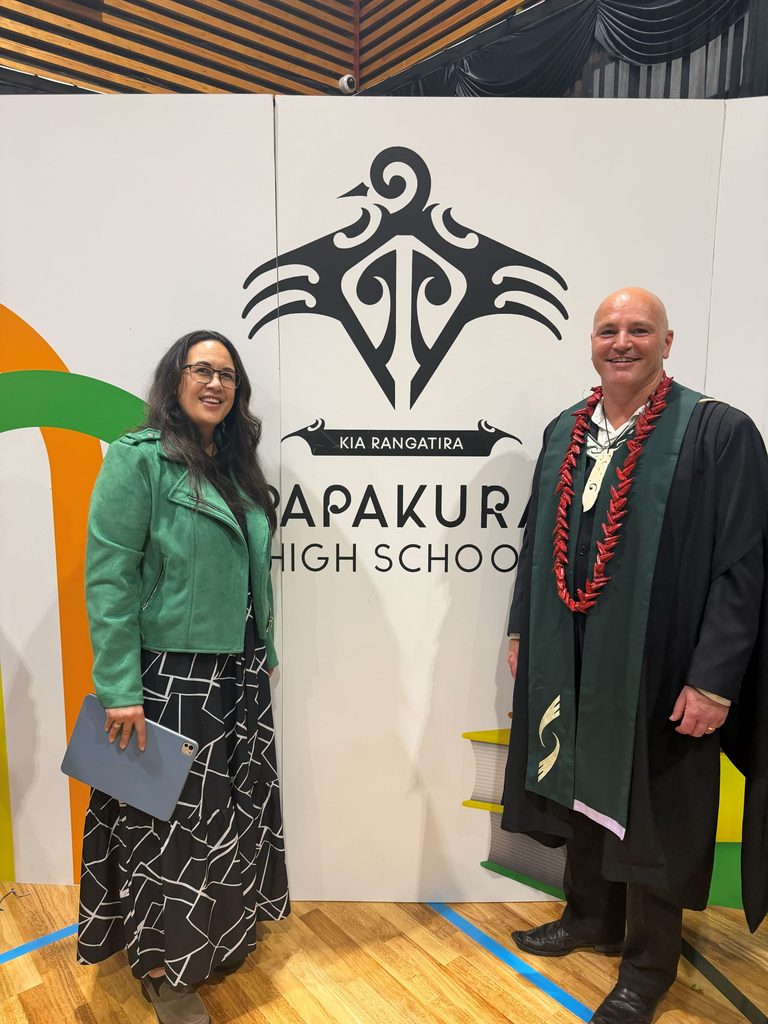
Tumuaki Principal Simon Craggs and I
Thirty years is a long time.
Long enough to build a career, make plenty of mistakes, learn a few things, change your mind about others, change your mind about yourself, and discover that life rarely follows the pathway you thought it would.
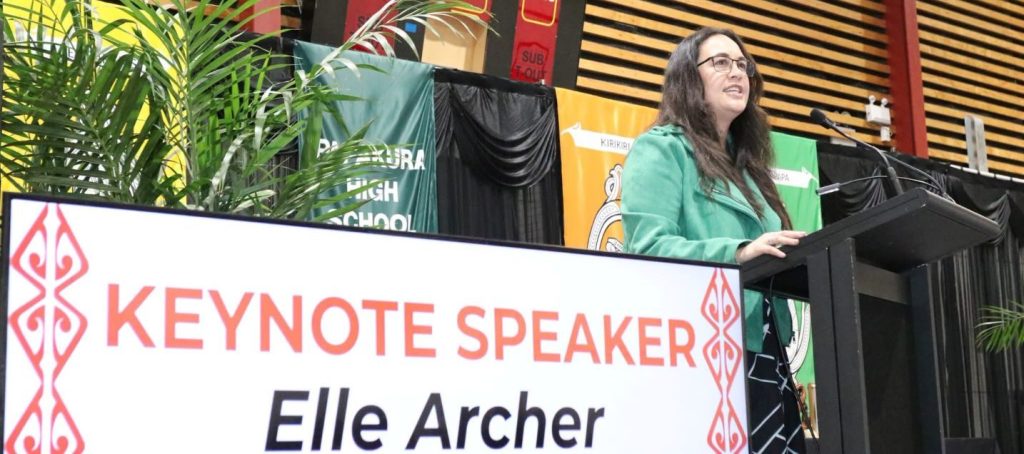
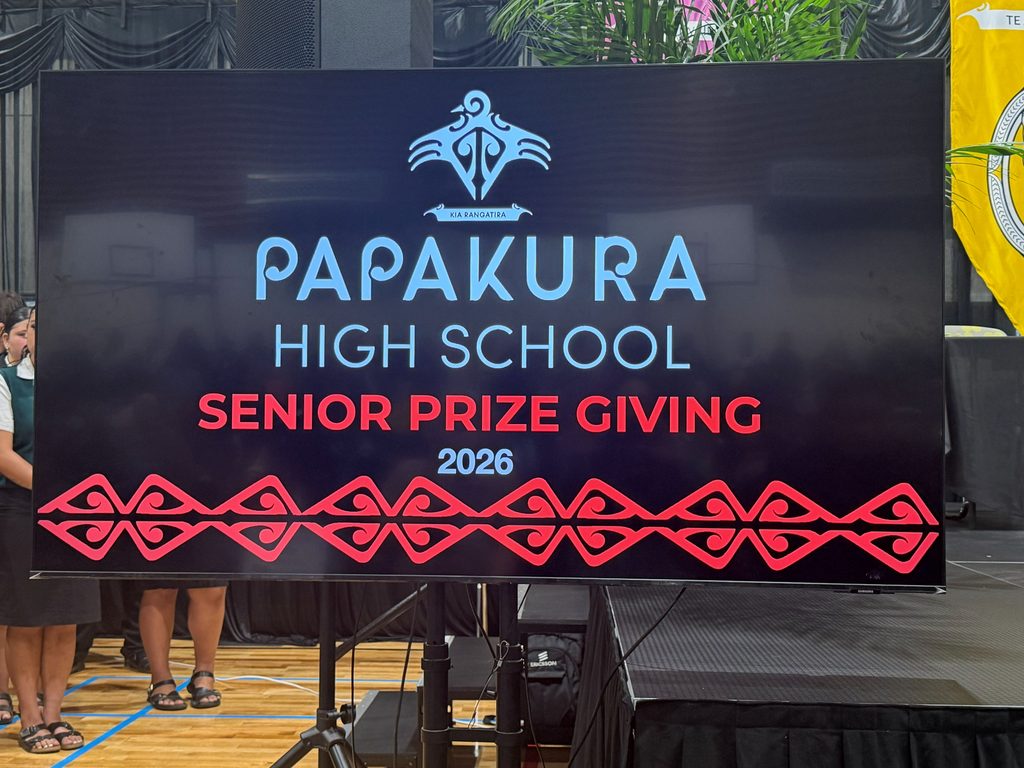
Last night, I returned to Papakura High School in South Auckland, my old kura, to speak at its prizegiving.
Around 400 people were gathered. Whānau, kaiako, dignitaries, school leadership and, most importantly, the rangatahi whose achievements we had all come together to celebrate.
I’ve had the privilege of speaking at many events over the years, across all sorts of environments and kaupapa. But this one was different.
It mattered to me on so many levels.
And as I’ve reflected on the experience, I’ve found myself thinking about the psychology of full-circle moments, the stories we carry about ourselves, and what it means to return to a place that helped shape us.
Not simply to remember.
But to contribute.
The girl who thought she’d stuffed it all up
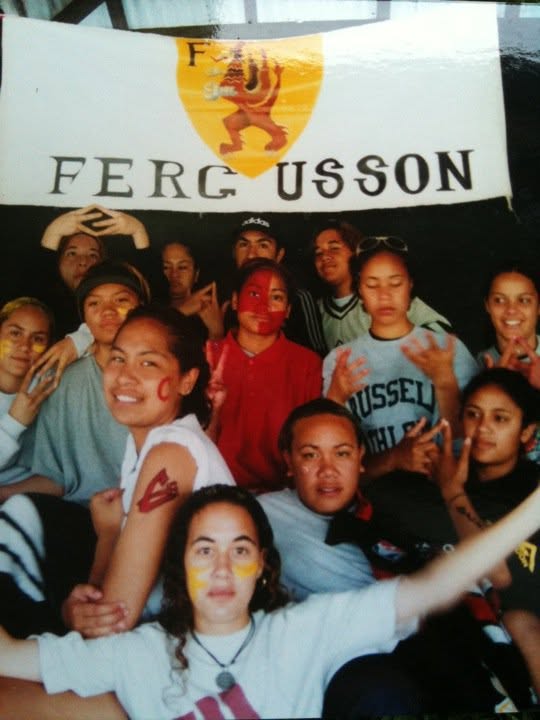
Our crew, 96′ – I’m at the bottom
I wasn’t the best ākonga at Papakura High.
That’s probably putting it rather kindly!
My journey through school wasn’t particularly conventional. I was navigating life, learning and working at the same time, trying to figure out who I was and where I might fit in the world.
My professional journey actually began during those school years. I was earning and learning from a very young age, discovering that I could pick things up, apply them, solve problems and learn more by doing.
Earned and learned, nē!
But I didn’t necessarily recognise those experiences as strengths at the time.
In fact, back then, I thought I’d stuffed things up.
I didn’t have a clear picture of my future, and I certainly didn’t imagine that three decades later I would be returning to the same school to share my journey with its students.
Looking back, I can see that I was developing capabilities, relationships and ways of thinking that would become important throughout my life.
But hindsight is a wonderful thing.
When you’re young and living through uncertainty, you don’t always have the benefit of knowing how things will turn out.
And that matters, because there are rangatahi sitting in classrooms today who may be telling themselves stories about what they can and cannot become, based on what has happened in their lives so far.
I know what that feels like.
Walking through those doors
When I walked back through the doors of Papakura High, I didn’t feel as though I was returning to confront my past.
I arrived as the woman I have become.
Strong, confident in my own ideas and experiences, comfortable with who I am, and grateful for the journey that has brought me here.
Were there memories? Āe, of course. Some wonderful, some difficult, and a few that still make me laugh.
But they were memories.
I wasn’t returning to find myself, or to prove to anyone that I’d made something of my life.
What I hadn’t anticipated was how much of myself I would recognise in the rangatahi.
Not because their circumstances are necessarily the same as mine. They have their own experiences, challenges, aspirations and ways of seeing the world.
But I recognised the possibilities.
The young people who are still figuring things out. Those whose capabilities may not yet be fully recognised, including by themselves. Those who are confident about their futures, and those who might be wondering whether they’re heading in the right direction at all.
I remembered what it felt like to be one of them.
And I wanted them to know that the story they might be telling themselves today doesn’t have to be the story of their tomorrow.
The psychology of a full-circle moment
I’ve been thinking about why returning to a formative place can affect us so deeply.
Psychology offers some interesting ways to explore this.
One is narrative identity, a concept developed extensively through the work of psychologist Dan McAdams. It describes how we construct and continually reinterpret the stories of our lives, connecting past experiences with our understanding of who we are today and who we might become.
Our experiences don’t change simply because time passes.
But the meaning we attach to them can.
The young girl who thought she’d stuffed things up is still part of my story. I remember her experiences, her uncertainty and her decisions.
What has changed is my understanding of those experiences.
I can now see capabilities developing where I once saw difficulties. I can recognise learning where I once saw detours. And I can appreciate how people, places and circumstances contributed to my journey, even when I didn’t understand their significance at the time.
That doesn’t mean every difficult experience was necessary, or that everything happens for a reason.
I don’t believe we need to romanticise hardship to recognise what we have learned from it.
Another psychological idea that resonates is generativity, associated with Erik Erikson’s work on human development. It concerns our investment in supporting and guiding future generations, and in contributing to something that extends beyond ourselves.
I think there’s something valuable in bringing these ideas together.
Because a full-circle moment doesn’t necessarily have to be about personal closure.
It can also be about recognising how our experiences might become useful to others.
And sometimes, that recognition only becomes real through connection.
When my past met their future
I shared some of my journey with the rangatahi that evening.
Not a polished story of everything going according to plan, because it certainly hasn’t.
But a story about finding your way, learning through experience, making mistakes, discovering your capabilities and recognising that there are many ways to contribute to the world.
And afterwards, I received feedback that my kōrero had connected with them.
That meant more to me than I can easily explain.
There was validation in that moment.
Not validation of my professional achievements, qualifications or appointments. I didn’t return to Papakura High needing those things acknowledged.
It was something much more personal.
The experiences of a young girl who once thought she’d got so much wrong had become meaningful to another generation.
Something from my past, carried through the woman I am today, had connected with the possibilities of their future.
That was the full-circle moment.
Not simply walking back through the doors.
Not standing on the stage.
Not even the enormous privilege of speaking to a room of around 400 people.
The circle didn’t close when I returned. It connected when they responded.
And I think that’s an important distinction.
Because meaning isn’t always something we arrive at independently. Sometimes it emerges through our relationships with others, when something we have experienced, learned or shared finds resonance beyond ourselves.
That evening was a total cup filler.
A mean-as night, in every sense.
Belonging, whakapapa and the connections we carry
Another highlight of the evening was meeting a young Ngāti Maru whanaunga.
Through our kōrero, we discovered our whakapapa hononga and shared a mihi.
It was a beautiful moment.
Here we were, two people from different generations, meeting in a school hall in South Auckland and recognising a connection that extended well beyond that room.
For me, that speaks to another dimension of what it means to return.
The psychology of identity and belonging can help us understand aspects of these experiences. But through te ao Māori, whakapapa brings additional layers of relationship, continuity and responsibility.
We don’t exist only as individuals moving through separate life journeys.
We are connected through whānau, whenua, communities, histories and generations.
And those connections can carry meaning and responsibilities that extend beyond our own achievements.
Seeing that young whanaunga, hearing about his journey and recognising the possibilities ahead of him was another reminder of why I value the opportunities we have to support one another.
We may not know where someone’s pathway will lead.
But we can help create the conditions in which they have opportunities to discover it.
Why returning to serve matters
There is something special about returning to a place that helped shape you.
But I don’t think the value lies simply in returning to tell people what you’ve achieved.
For me, it’s about what you can contribute now.
Since reconnecting with Papakura High, I’ve been invited to advise and contribute to course content through its STEAM Academy, and to help connect people, practitioners and opportunities into the learning environment.
I’ve also decided to get in behind scholarships and micro-internships, helping create opportunities for rangatahi to experience different fields, work alongside practitioners, explore emerging technologies and discover pathways they may not yet have considered.
That includes connecting learning with real-world experiences, something I feel strongly about.
After all, applied learning was a significant part of my own journey.
I learned by doing, by working, by asking questions, by getting things wrong, reflecting, adapting and trying again.
And I continue to learn that way today.
The difference is that I now have relationships, experiences and access to environments that may be useful to the next generation.
Why wouldn’t I share those where I can?
This isn’t about establishing a legacy.
I’m not interested in returning to my old school to have my name attached to something, or to create a monument to my own journey.
I simply want to get in behind a kura that is doing the mahi of shaping the next generation of contributors to our communities, industries and society.
And I want to do that in ways that are useful to the kura and its rangatahi.
Sometimes that might mean contributing ideas to course content. Sometimes it might mean introducing a practitioner who opens a young person’s eyes to a field they never knew existed. Sometimes it might be a scholarship, an internship, a conversation or an experience that helps someone discover a capability they didn’t know they had.
Not every contribution needs to be grand.
And not every contribution will have an immediately visible outcome.
But the opportunities we create and the connections we enable can have effects that reach well beyond the moment in which they occur.
What are we recognising as potential?
Returning to Papakura High also made me reflect on our education systems more broadly.
How do we recognise potential in young people?
What do we reward? What do we measure? And what might we overlook?
Academic achievement matters, and it was wonderful to celebrate the achievements of so many rangatahi that evening.
But human capability is wonderfully diverse.
Some young people demonstrate their strengths through academic study. Others through creativity, practical problem-solving, leadership, technology, relationships, entrepreneurship, sport, culture or service.
Many demonstrate their capabilities across several of these environments, given the opportunity.
And some are still discovering where their strengths lie.
I wonder how many rangatahi are sitting in classrooms today believing they’ve already stuffed things up.
How many are measuring themselves against expectations that don’t fully recognise what they’re capable of?
How many might flourish if they had access to a different learning experience, a different mentor, or an opportunity to apply their knowledge in a real-world environment?
These aren’t questions for schools alone.
They’re questions for employers, industry, tertiary providers, communities, whānau and those of us who have developed capabilities and connections over the course of our lives.
If we want rangatahi to see possibilities beyond the pathways immediately visible to them, we have a role in helping make those possibilities accessible.
Not by deciding their futures for them.
But by opening doors and supporting their agency to choose.
Coming full circle, without closing the circle
I’ve come to think that we sometimes misunderstand what a full-circle moment represents.
We imagine a circle closing, a journey completed, a story neatly resolved.
But life rarely works that way.
I didn’t return to Papakura High as someone whose journey was finished.
Far from it. I’m still learning, still questioning, still making mistakes and still discovering new ways to contribute.
What happened that evening was a connection between different points in time.
The young girl I once was.
The woman I have become.
And the rangatahi whose futures are still unfolding.
The feedback that my kōrero had resonated with them brought those points together in a way I hadn’t anticipated.
And the opportunity to continue supporting the kura means the connection doesn’t end there.
Perhaps that’s one of the most meaningful things about returning to serve.
We bring back something different from what we took away. Our experiences, relationships, capabilities and perspectives have grown. The place itself has evolved. New generations have arrived, with their own aspirations and possibilities.
And we have an opportunity to contribute to what happens next.
Not because we owe the past something.
Not because we need to prove who we’ve become.
But because we recognise the value of being part of something that continues beyond us.
Thirty years ago, I couldn’t have imagined returning to Papakura High in this way.
Today, I’m grateful that I did.
And I’m looking forward to finding out what we can help make possible together.
Still earning. Still learning. And now, another opportunity to tautoko those coming through.
Ngā mihi nui to Tumuaki Simon Craggs, the kaiako, whānau and wider Papakura High School community for the invitation, the welcome and the opportunity to reconnect.
And to the rangatahi: thank you for your achievements, your engagement and your feedback. You made the evening something I’ll carry with me for a long time.
Indigenous agency must be foundational to the technological futures we are creating. Drawing on my mahi across AI, quantum technologies, governance, d...
The futures we imagine influence the decisions we make today, and those decisions shape what future generations will inherit. Through our work develop...